Ethan Cole had built his empire on control.
Control over billion-dollar negotiations. Control over boardrooms full of men who underestimated him. Control over emotions he buried so deeply that even grief became silence.
But on a golden Seattle evening in Volunteer Park, all of that control vanished in seconds.
“Ollie, stop!”

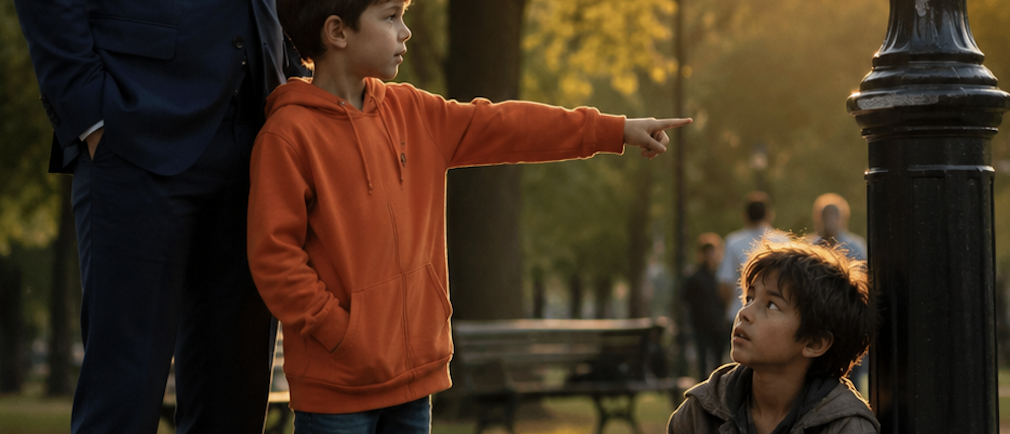
His five-year-old son ignored him completely, sprinting across the wet grass toward a homeless boy sitting beneath a lamppost.
The older child looked painfully thin. Barefoot. Drenched from the Seattle drizzle. His oversized hoodie hung loosely over sharp shoulders, and hunger hollowed out his face far too young.
But it wasn’t the poverty that stopped Ethan cold.
It was the boy’s eyes.
Gray.
Exactly like his own.
Oliver knelt beside him without fear and gently grabbed his hand.
Then he looked back at Ethan with complete certainty.
“Dad,” he said softly, “that’s my brother.”
The words hit harder than any business betrayal Ethan had ever survived.
The older boy stared at Ethan cautiously, like someone who had learned adults could never be trusted.
“What’s your name?” Ethan asked carefully.
“…Noah.”
“Noah what?”
“Noah Reed.”
The surname knocked the air from Ethan’s lungs.
Clara Reed.
A woman he had loved once before ambition destroyed everything between them.
Ten years earlier, Clara had walked away from Ethan’s world of money and power, leaving behind only a note:
*I’m sorry. This is for the best.*
He searched for her at first. Then anger replaced heartbreak, and eventually he convinced himself she had chosen to disappear.
Now her son sat barefoot beneath a park lamp.
Possibly his son.
“How old are you?” Ethan asked quietly.
“Nine.”
The answer hollowed him out instantly.
Nine years.
Nine years Ethan never knew.
Oliver squeezed Noah’s hand proudly.
“I told you he’s my brother.”
Ethan crouched slowly, careful not to frighten him.
“Where’s your mother?”
Noah’s eyes dropped.
“She died. Two months ago.”
The world tilted.
Clara was gone.
The woman who once believed every city had a hidden soul. The woman who told Ethan success meant nothing if it cost your humanity.
Gone.
And her child had ended up homeless.
Oliver quietly removed his hoodie and draped it over Noah’s shoulders.
“He’s cold, Dad.”
Ethan swallowed hard.
“Where have you been staying?”
“Bus stations. Benches. Behind bakeries.”
Each word felt like a knife.
“Did social services help?”
Noah immediately stiffened.
“I’m not going back.”
Fear flashed behind the anger in his eyes. Real fear.
Ethan understood immediately: something terrible had happened wherever Noah had been placed.
When Ethan offered his coat, Noah flinched like he expected violence.
“I’m not going to grab you,” Ethan said softly.
The boy hesitated before finally wrapping himself in the expensive cashmere.
It swallowed him whole.
“What did Clara tell you about me?” Ethan asked.
Noah looked down.
“She said you had a good heart before people taught you to protect it wrong.”
Ethan almost broke right there in the park.
Later, at a small diner nearby, Noah devoured soup and pancakes with the speed of a starving child trying not to look hungry. Ethan pretended not to notice so he could keep some dignity.
Meanwhile, Oliver chatted endlessly about dinosaurs.
Surprisingly, Noah answered.
Slowly at first.
Then more.
For the first time that night, Ethan saw traces of childhood still alive beneath all the survival instincts.
Eventually Noah pulled a small key from around his neck.
“My mom said not to give this to you unless you cried.”
Ethan froze.
“She said Ethan Cole only cries when something matters.”
One tear escaped before he could stop it.
Noah silently handed him the key.
It opened a locker at the bus station.
Inside was Clara’s final truth.
Photographs.
Medical bills.
A birth certificate with the father’s name left blank.
And one letter addressed to Ethan.
With shaking hands, he opened it.
Clara admitted everything.
Noah was his son.
She confessed she left because she feared what Ethan’s wealth and ambition were turning him into. But she also admitted she never stopped loving him.
Then came the line Ethan would never forget:
*Please do not punish Noah for my fear.*
She described Noah lying to doctors that he wasn’t hungry. Sleeping beside her hospital bed pretending not to hear her cry at night.
Then came the warning.
Something terrible was happening at the Mercer Street Group Home where Noah had briefly stayed after Clara’s death.
No one believed him.
But Clara did.
And now Ethan would too.
Days later, DNA confirmed the truth.
99.9998%.
Noah was his son.
When Ethan told him, Noah’s face crumpled under emotions too heavy for a nine-year-old to carry.
Oliver launched himself into a hug instantly.
“I knew it!”
At first Noah froze.
Then slowly hugged him back.
For the first time in years, he let himself belong somewhere.
Ethan fought for emergency guardianship immediately. Court hearings followed. Investigations uncovered horrifying abuse at Mercer Street—locked basement punishment rooms, missing funds, terrified children silenced for years.
Noah had survived all of it alone.
When Ethan told him the people responsible were finally being arrested, Noah collapsed against him sobbing, gripping Ethan’s shirt with desperate hands.
“I believe you,” Ethan whispered over and over.
And this time, someone finally did.
Months passed slowly.
Noah learned the house was safe. That food wouldn’t disappear. That doors stayed unlocked. That no one would drag him away in the middle of the night.
Healing came in small moments.
Extra pancakes at breakfast.
Late-night dinosaur debates with Oliver.
A basket of snacks Ethan quietly left beside Noah’s bed with a note:
*No asking required.*
One night Noah accidentally called him “Ethan-Dad.”
Ethan pretended not to notice because some fragile things needed gentleness to survive.
A year later, Ethan reopened Mercer Street as the Clara Reed Children’s Advocacy Center.
No locked basements.
No forgotten children.
During the opening ceremony, Noah stood nervously before the crowd.
“My mom used to say bridges are promises made out of steel,” he said, voice trembling. “I think people can be bridges too.”
Then he looked directly at Ethan.
“Sometimes they’re late. But they can still help you cross.”
The crowd erupted into tears and applause.
That night, after everyone left, Noah stood beside Ethan beneath the warm lights of the center.
“Can I call you Dad now?”
Ethan’s entire world stopped.
“Yes,” he whispered. “You can.”
And for the first time in years, control no longer mattered.
Family did.