The night my great-grandmother found me standing in a soup line changed everything I believed about family.
Until then, I thought I had already learned life’s cruelest lesson: sometimes the people who are supposed to love you most will watch you suffer without helping at all.
My name is Rachel Morgan. I was twenty-six, unemployed, exhausted, and trying not to fall apart in front of my six-year-old daughter, Sophie.
That winter was merciless. After losing my cashier job, I spent weeks searching for work while drowning in overdue bills, eviction notices, and panic. I kept telling myself things would improve before they got truly bad.
Then our landlord changed the locks.
I still remember standing in the freezing parking lot, staring at our belongings shoved into trash bags while Sophie hugged her stuffed rabbit tightly.
“Where are we going now, Mommy?” she asked softly.
“Adventure,” I lied with a smile I didn’t feel.
But children always know when adults are scared.
My parents knew exactly what was happening too. That was the part that hurt most.
To everyone else, they painted me as irresponsible and difficult. They loved telling people how disappointed they were that I became pregnant young. Meanwhile, nobody questioned why they allowed their own daughter and granddaughter to become homeless while they vacationed in Italy and remodeled kitchens.
The truth was simple: compassion inconvenienced them.
And Sophie and I had become inconvenient.
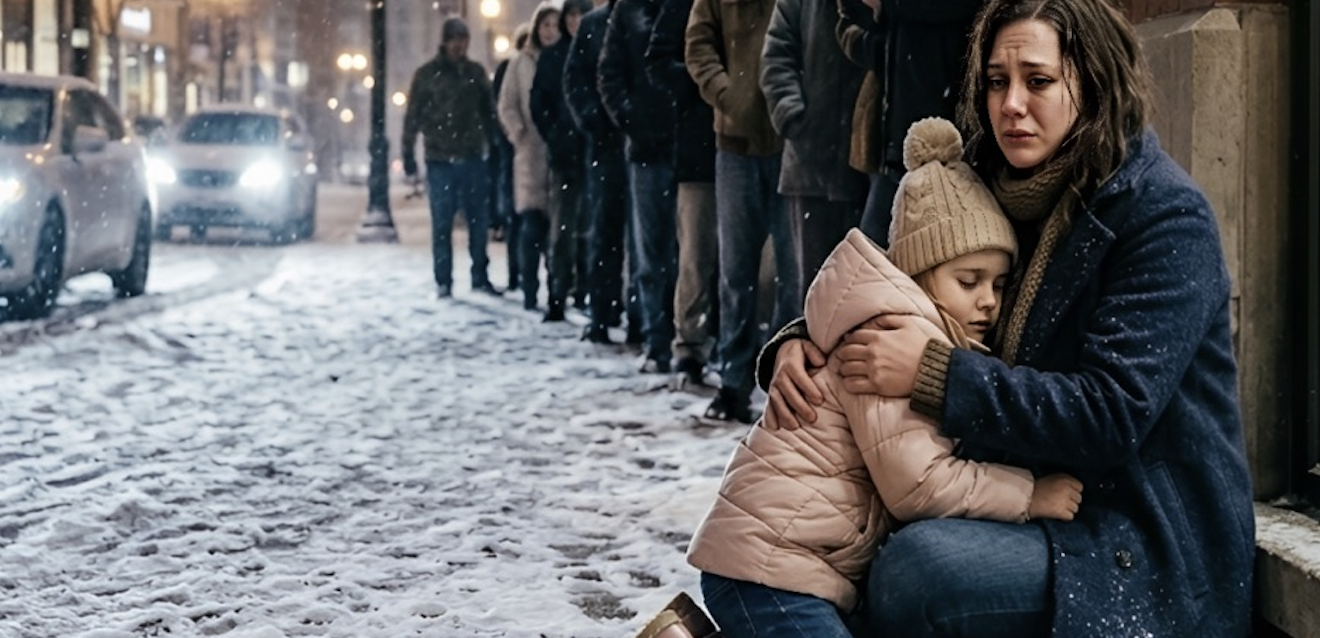
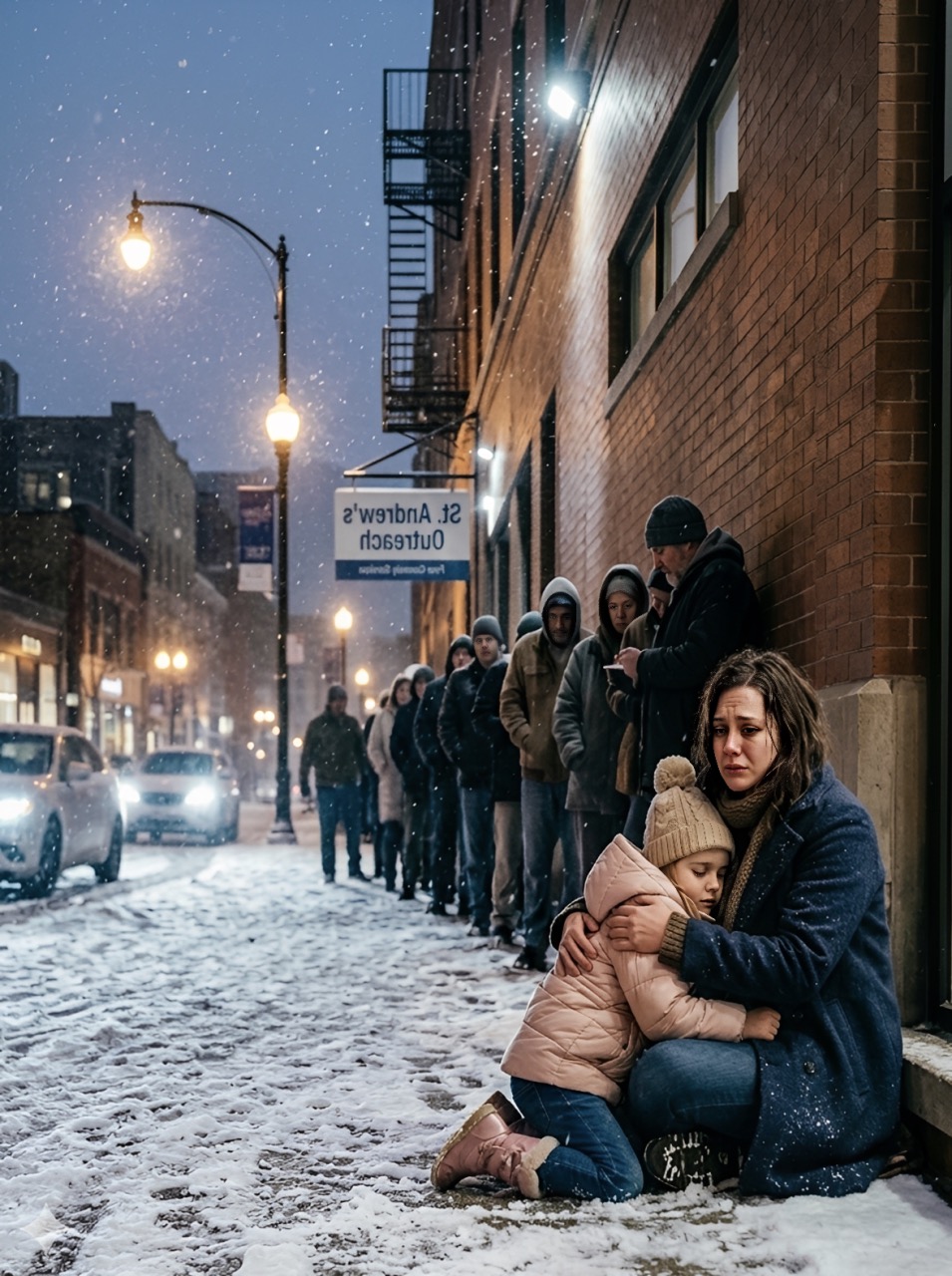
Three days after the eviction, we stood outside St. Andrew’s Outreach Shelter waiting for soup beneath a flickering streetlamp while snow drifted through the air. Sophie’s tiny fingers were freezing inside mine.
“You hungry, bug?” I asked quietly.
She nodded, then forced a brave little smile.
“It’s okay,” she whispered. “I’m not super hungry.”
That nearly destroyed me.
Because no six-year-old should learn how to pretend hunger doesn’t matter.
The shelter line moved slowly as families huddled together against the wind. Then bright headlights swept across the street.
A black Rolls-Royce pulled to the curb.
At first, nobody paid attention. Wealthy people sometimes visited shelters around the holidays for charity photos.
I barely looked up.
Until the rear door opened.
An elderly woman stepped out wearing an ivory coat, elegant gloves, and pearls that probably cost more than everything Sophie and I owned combined. Even from a distance, she carried herself with quiet power.
Then she saw me.
And froze.
“Rachel?” she whispered.
My heart stopped.
No. Impossible.
She hurried toward me through the snow.
“Rachel Morgan?”
I stared in shock as recognition crashed over me.
My great-grandmother.
Evelyn Harrington.
The woman my parents claimed had abandoned the family years ago.
I hadn’t seen her since I was sixteen.
“Grandma Evelyn?” I whispered.
The moment she reached me, she grabbed my face gently, as if she needed proof I was real.
“Oh my God,” she breathed. “My darling girl.”
Then she looked at Sophie, and her expression shattered.
“And this is my great-granddaughter?”
Sophie hid behind me shyly.
Evelyn’s eyes filled with heartbreak. “Why are you here?” she asked softly. “Why are you standing outside a shelter?”
I tried to answer calmly, but tears came first.
“We don’t have anywhere to go.”
Something inside Evelyn changed instantly.
“Where are your parents?” she asked quietly.
I laughed bitterly. “Probably drinking wine somewhere.”
Then she asked the question that changed my life forever.
“And why aren’t you living in the Willowcrest house?”
I blinked. “The what?”
“The house on Willowcrest Avenue,” she said slowly. “The property I transferred to you eight years ago.”
The world tilted beneath me.
“What are you talking about?”
Her face lost color.
“I signed it into your name after your grandfather died,” she whispered. “Your parents handled the paperwork.”
“I never received anything.”
Silence.
Then fury exploded across Evelyn’s face.
At eighty-two years old, she suddenly looked terrifying.
“Call my attorney,” she ordered sharply to her assistant. “And bring me every document connected to Willowcrest immediately.”
Then she turned back to me.
“How long have you been homeless?”
“Three days.”
“And your parents knew?”
I nodded.
Her expression went cold. “Get in the car.”
Three days later, Evelyn summoned me to my parents’ anniversary party at a luxurious country club ballroom filled with chandeliers, champagne, and wealthy guests.
The moment we walked in holding Sophie’s hand, the room fell silent.
My mother nearly dropped her wine glass. My father turned pale.
“Rachel?” he stammered.
Evelyn stepped forward calmly.
“This,” she said, “is called accountability.”
She placed a thick stack of legal papers on the table.
“You stole from your daughter.”
My mother’s face drained white.
“The Willowcrest property legally belonged to Rachel and Sophie,” Evelyn said coldly. “While they stood outside shelters begging for food, you lived off assets that were never yours.”
“Mom, this isn’t the place—” my father began.
“Oh, I think it’s exactly the place.”
Nobody in the ballroom even pretended not to listen.
Then Evelyn delivered the final blow.
“Effective immediately, you are removed from my estate entirely.”
My father stared at her in disbelief.
“You can’t be serious.”
“I have never been more serious in my life.”
Then she turned to me, her expression softening.
“The Willowcrest house still belongs to you, Rachel. The keys are waiting.”
Beside me, Sophie squeezed my hand tightly.
“Mommy,” she whispered shakily, “do we really have a house?”
I looked down at my little girl — the child who pretended she wasn’t hungry to protect me.
And finally, after years of heartbreak, I could give her the answer she deserved.
“Yes, sweetheart,” I whispered through tears.
“We’re finally going home.”
Behind us, my parents stood speechless inside a ballroom full of luxury that no longer belonged to them.
And in that moment, I realized something important:
Justice doesn’t always arrive quickly.
But sometimes… it arrives wearing pearls and carrying legal documents.