For six months, my 13-year-old son, Evan, told me that every dollar he earned from his Saturday job was being saved for the bicycle he wanted more than anything. Yet the bike never showed up, and he grew more and more guarded whenever money came up.
I first discovered he was working when he came home one day smelling like cooking grease and citrus-scented soap.
“Where have you been?”
“At work.”
“Working where?”
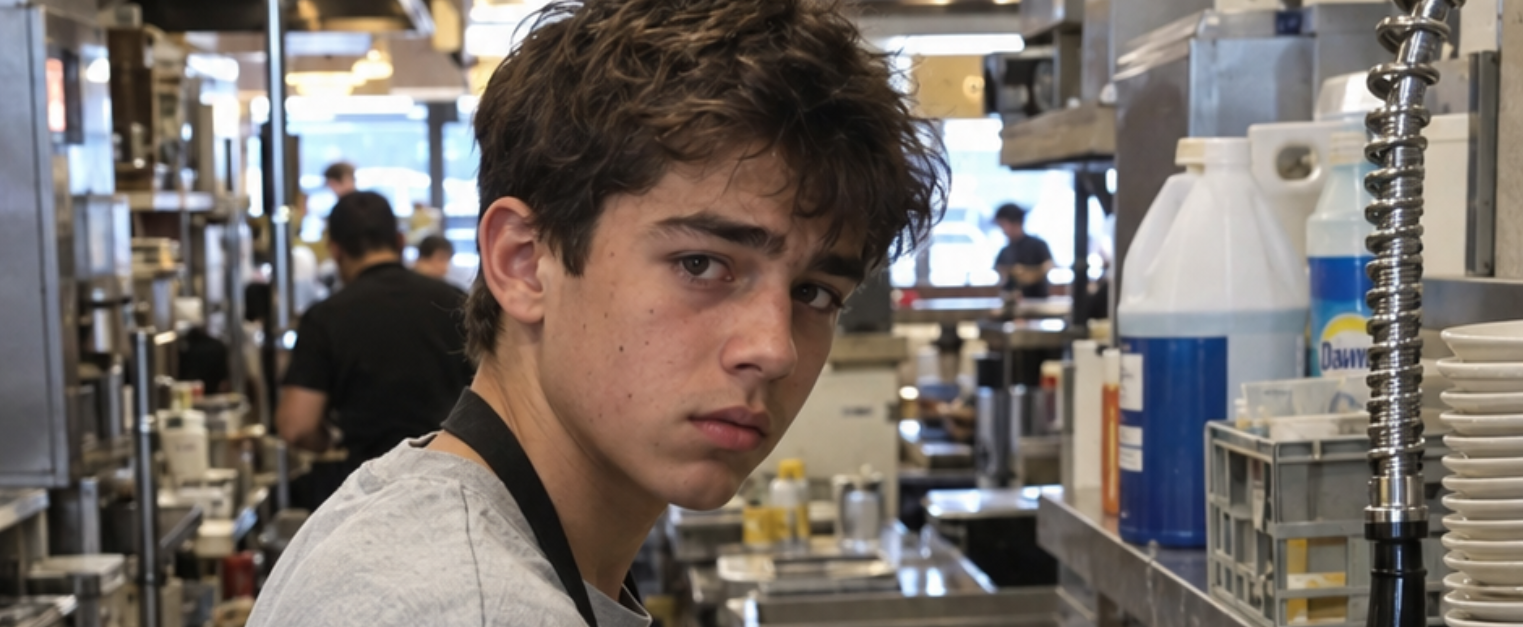
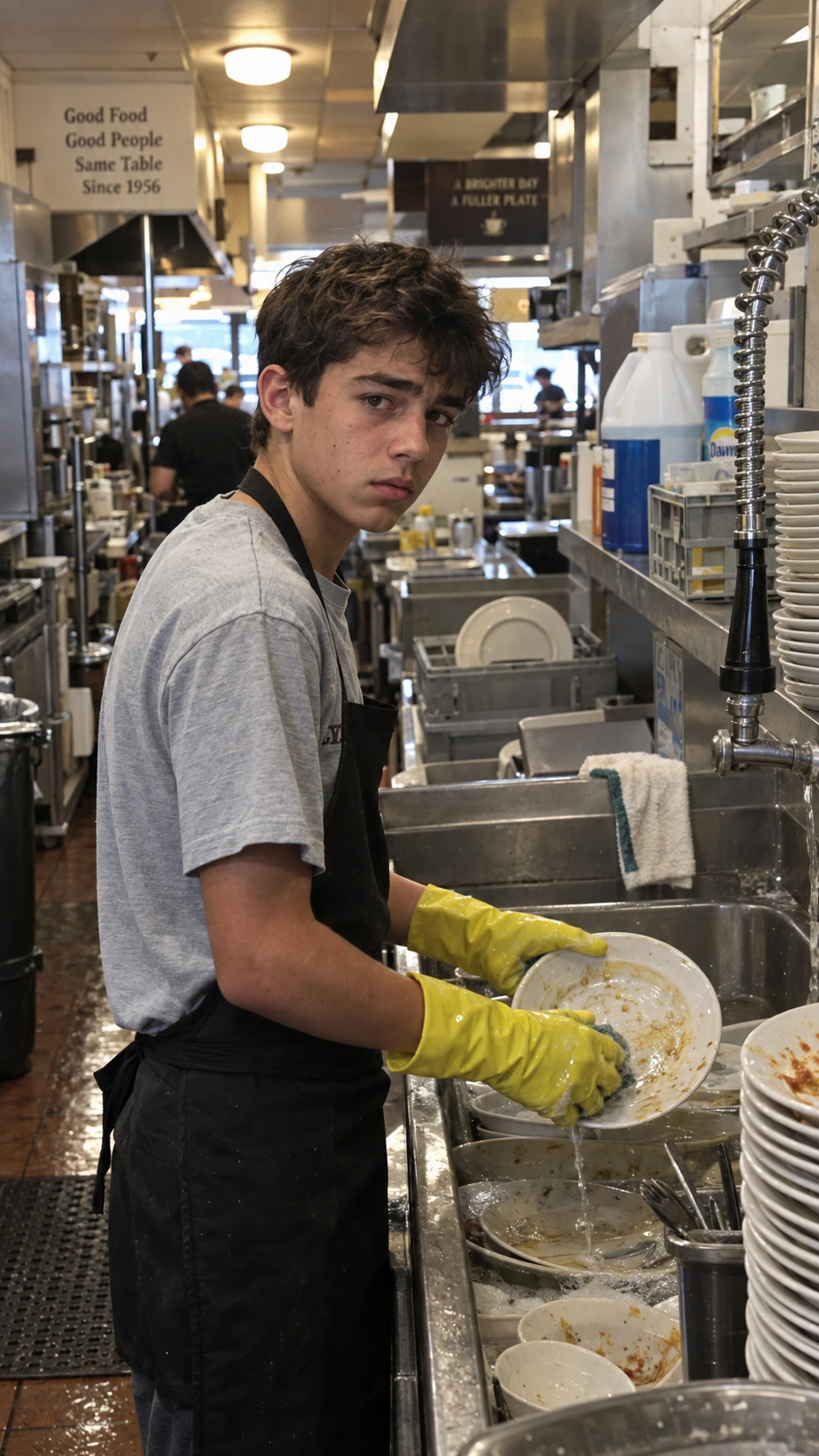
“Mr. Alvarez lets me help out at the diner on Saturdays.”
I just stared at him.
“You got yourself a job and didn’t tell me?”
“I wanted to pay for the bike on my own, Mom.”
I couldn’t help feeling proud.
Ever since his father, Jeremy, had passed away three years earlier, Evan almost never asked me for anything costly.
But half a year went by, and there was still no bicycle.
Every time I asked how much money he had put aside, he gave me the same answer.
“Almost enough.”
Then one day, I caught him stuffing a thick bundle of cash into his backpack.
On another Saturday, he came home two hours later than usual, covered in dirt with one sleeve ripped.
When I pressed him about it, all he said was, “Nothing happened.”
A few days later, Mr. Alvarez called me.
“Ma’am, we need to discuss Evan.”
My heart immediately sank.
“Did he get into trouble?”
There was a pause.
“Do you have any idea what he does with his paychecks?”
“He told me he’s saving them for a bike.”
“Everything that kid has been telling you about that money is a lie.”
Before I could answer, I heard Evan yelling somewhere behind him.
“Please! Don’t tell my mom!”
Then Mr. Alvarez said firmly, “You need to come here right now.”
I hurried to the diner.
When I walked inside, a plastic bus tub was overturned on the floor.
Evan stood nearby, arguing with an older employee named Cal over a white envelope.
“Give it back!” Evan shouted.
“No,” Cal said.
I stepped between them and grabbed the envelope.
“Is this your paycheck?”
Evan nodded.
“Yes.”
Cal crossed his arms.
“Your son just tried to give me every penny of it.”
Evan immediately protested, insisting he owed Cal because Cal had helped him.
That was when Mr. Alvarez finally told me what had been going on.
“Do you know how many paychecks Evan has actually kept during the past six months?”
I said nothing.
“One.”
My stomach twisted.
Then I noticed Evan’s backpack lying open on the floor.
Several envelopes had spilled out beside a city bus map.
The map was covered with red circles and handwritten notes.
TIRES.
MR. T.
HAIRCUT.
STORE LADY.
Beside some of the notes were dollar amounts.
I demanded to know what all of it meant, but Evan refused to explain.
Finally, Cal admitted that he had followed Evan one afternoon because he was worried about him.
“He went to Mason Tire,” Cal said.
I knew exactly which place he meant.
Four months after Jeremy died, during an especially bitter winter, I had gone to Mason Tire with two ruined tires and barely enough money to replace one.
The owner replaced both.
“Pay me back someday,” he had told me.
I had never forgotten what he did for us.
When Evan and I arrived at Mason Tire, the owner recognized him immediately.
“You told me you were finished doing this.”
Then he saw me.
“Lindsay?”
He opened a drawer and pulled out an envelope labeled FOR TIRES.
“A few months ago, your boy came in here carrying $180,” he explained.
“He said he owed me for that tire from three years ago.”
I looked at Evan in disbelief.
The owner said he had only taken the money because Evan absolutely refused to leave otherwise.
But instead of spending it, he had put every dollar aside, planning to return it.
I looked down at the bus map again.
The tire shop.
A barber.
A grocery store.
Mrs. Donnelly’s neighborhood.
And suddenly, everything made sense.
Every place on that map represented someone who had helped us after Jeremy died.
“How can you even remember all of this?” I asked softly.
Evan lowered his eyes.
“Dad would’ve remembered.”
The words nearly broke me.
“Everybody helped us after he died,” he said quietly.
“With tires, groceries, rides, haircuts.
Dad always said that when somebody helps you, you pay them back.”
Then I remembered the Saturday Evan had come home muddy and torn up.
He hadn’t been getting into trouble.
He had been fixing Mrs.
Donnelly’s broken fence because she used to pick him up from school whenever I couldn’t get away from work.
Later that day, I drove Evan to Jeremy’s favorite park.
We sat together beside the bike trail in silence for a while.
“Your dad spent a lot of his life helping people,” I finally said.
“But other people helped him too.”
Evan stared at the map in his hands.
“But Dad isn’t here to do his part anymore.”
I moved closer to him.
“You inherited your father’s kindness.
You didn’t inherit every unfinished responsibility he left behind.”
That was when Evan finally collapsed against my shoulder and started crying.
“I thought you needed me, Mom.”
I held him tightly.
“I need you to be my son.
I don’t need you to become another person responsible for taking care of me.”
Later, we went back to the diner.
Cal pointed at the paycheck still in Evan’s hand.
“If you try giving me that money again, I’m going to retire twice.”
Evan laughed, then tucked the envelope into his own pocket.
A few months later, he finally saved enough to buy a used bicycle.
One afternoon, while riding through the neighborhood, he stopped when he saw a younger boy struggling with a chain that had fallen off his bike.
Evan crouched down and fixed it.
The boy’s father reached for his wallet.
“What do I owe you?”
Evan hesitated for a moment.
Then he smiled.
“Just help someone else when they’re having a hard time.”
He climbed back onto his bike and started pedaling away.
“Mom!
Time me!”
I lifted my phone.
“Go!”
And my son rode on.